Oruarangi Pā – Layers of Time Beneath Our Feet
- 20 January 2026
Oruarangi Pā, just south of Thames, is one of the most significant pā sites in the North Island. The Auckland Museum holds a major collection of artefacts from the site, forming a substantial part of its Māori exhibition.
Dating back to the classical period of Māori archaeology (1300 to 1500), Oruarangi is an ancient swamp pā with a long, layered history. It has seen intermittent occupation, key historical events, and numerous excavations, some authorised, others not.
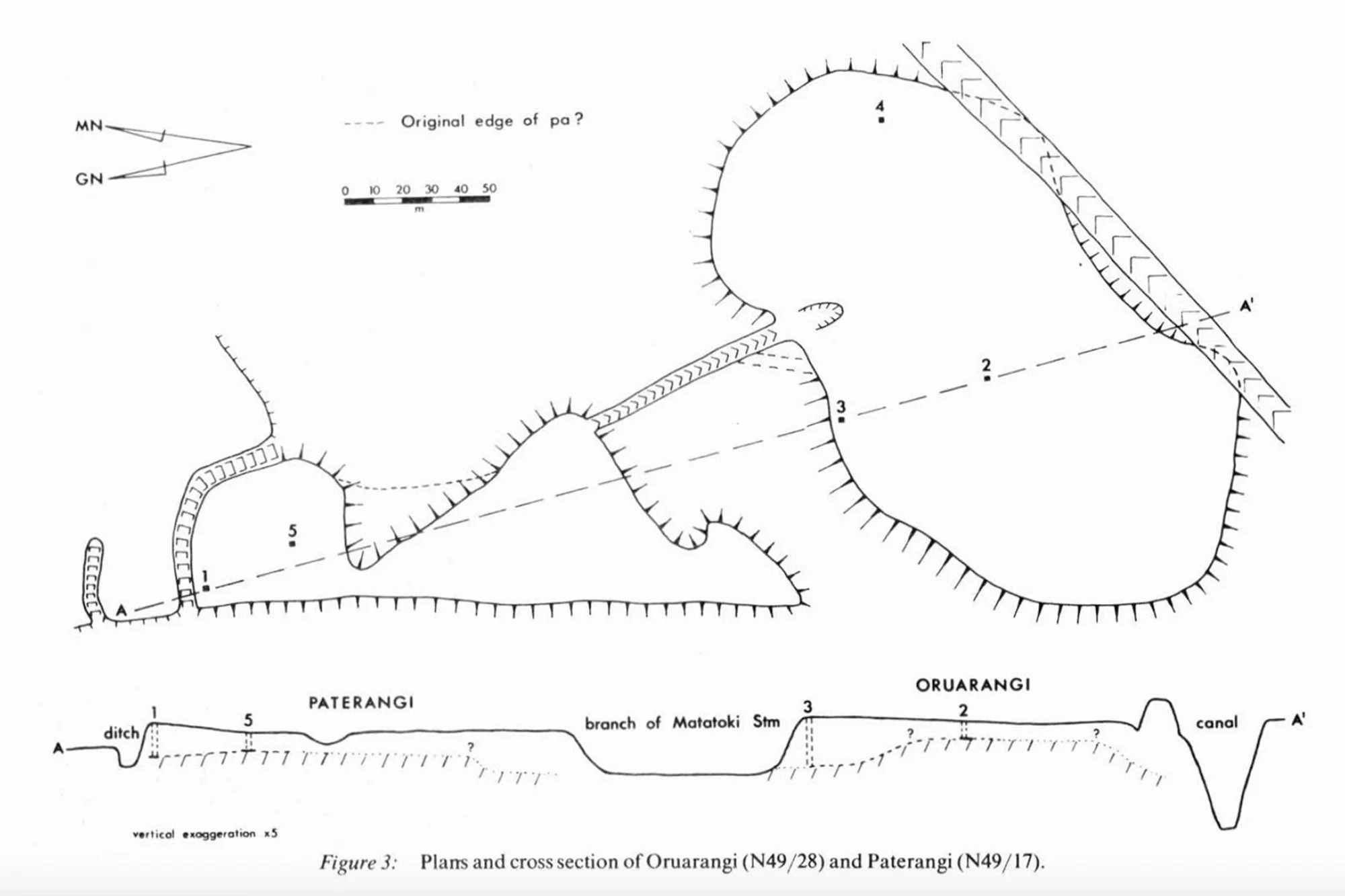
Plan and cross-section of Oruarangi Pā and Paterangi Pā - Simon Best 1979.
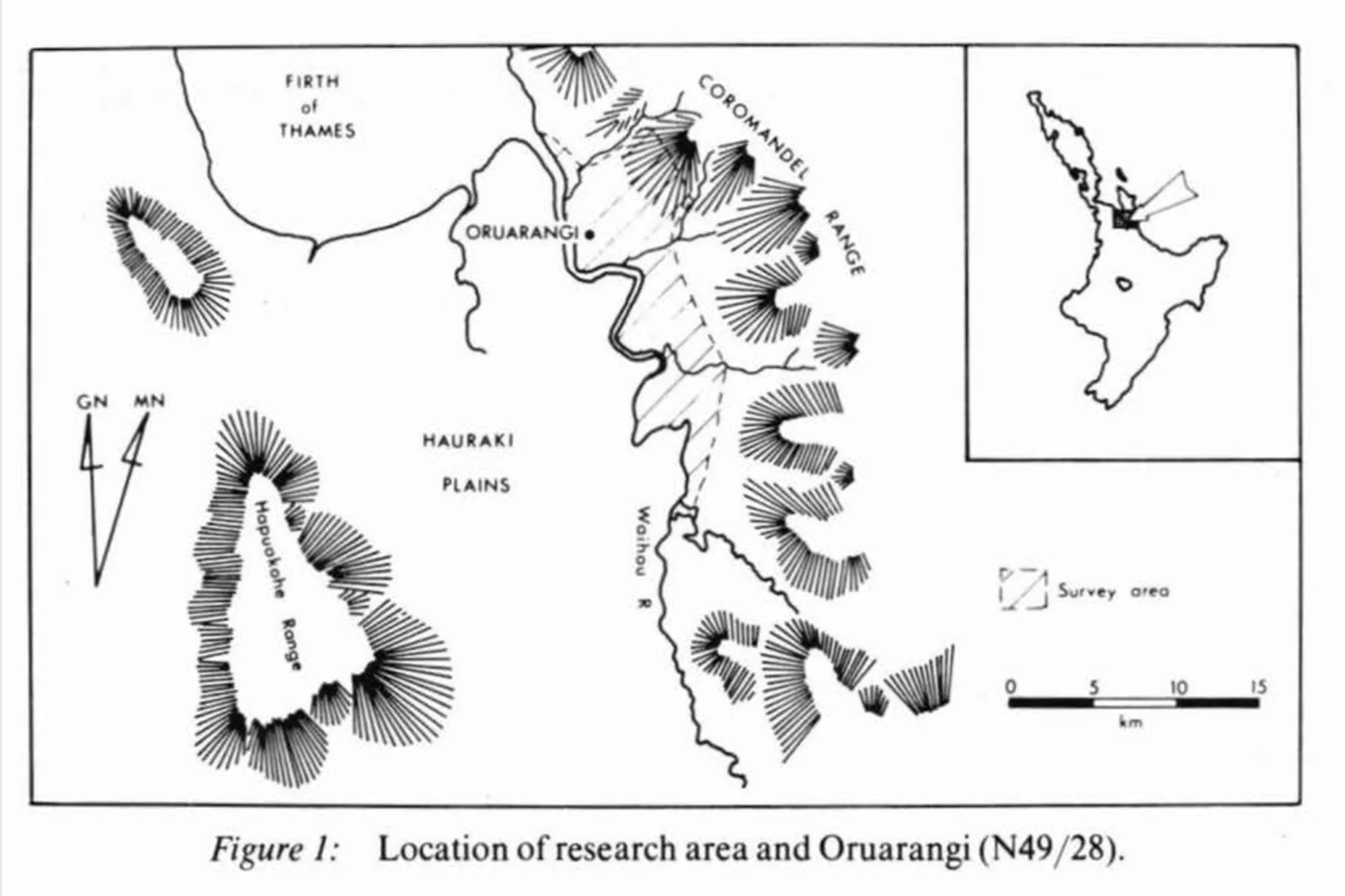
Location of Oruarangi Pā - Simon Best 1979
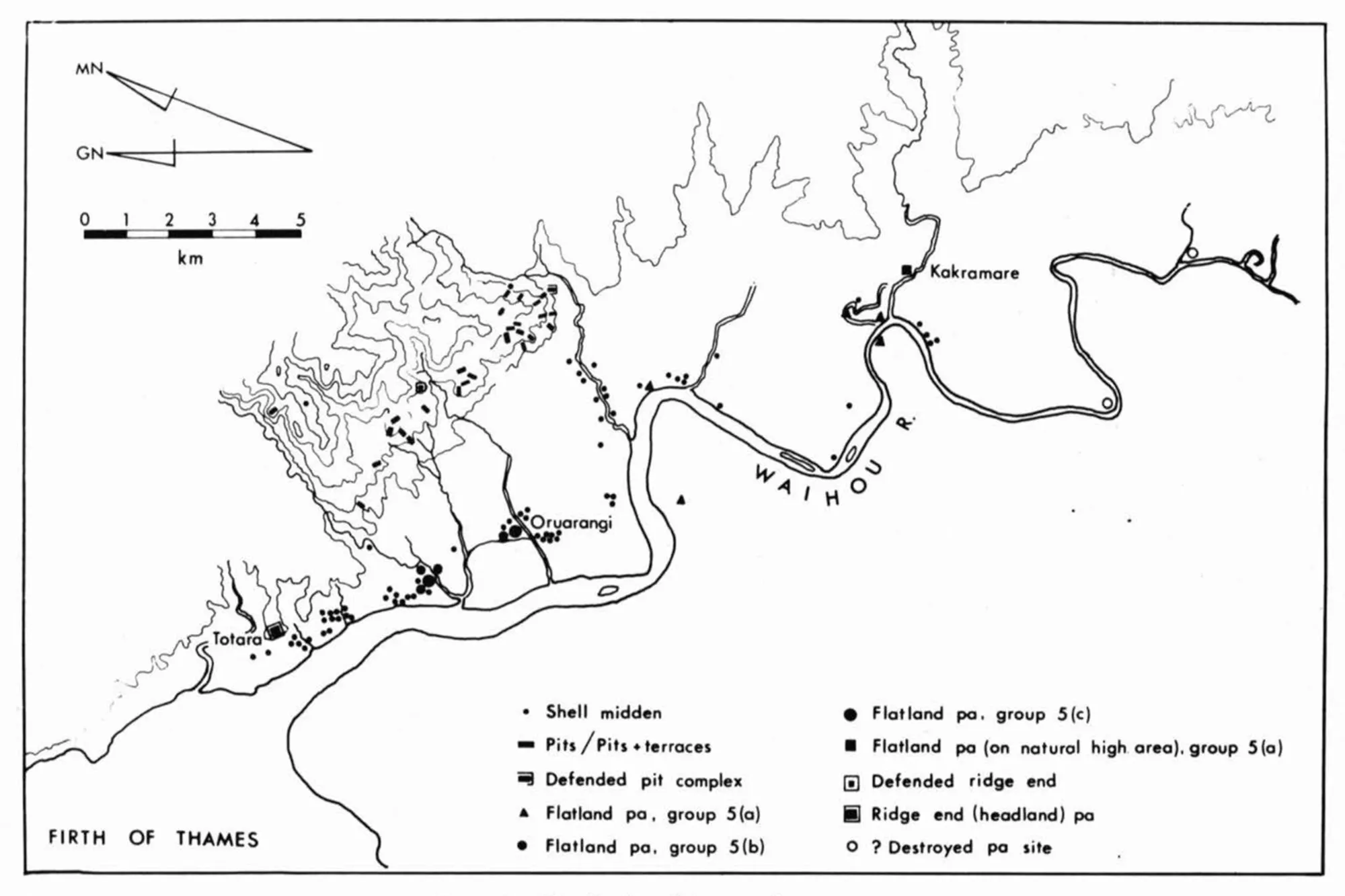
Location of Oruarangi Pā and other significant pā along the Waihou River - Simon Best 1979.
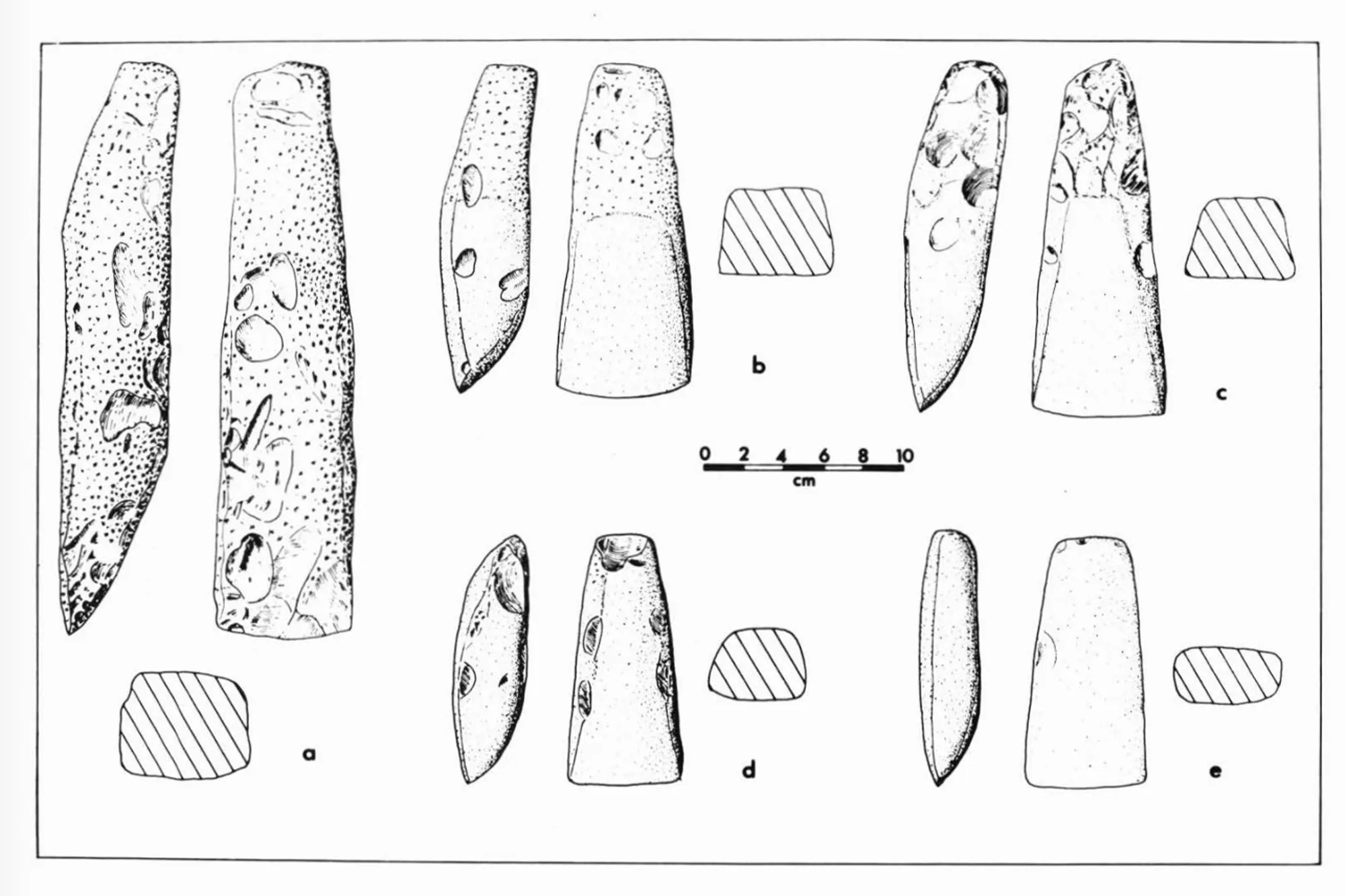
Artefacts found at Oruarangi Pā - Simon Best 1979.
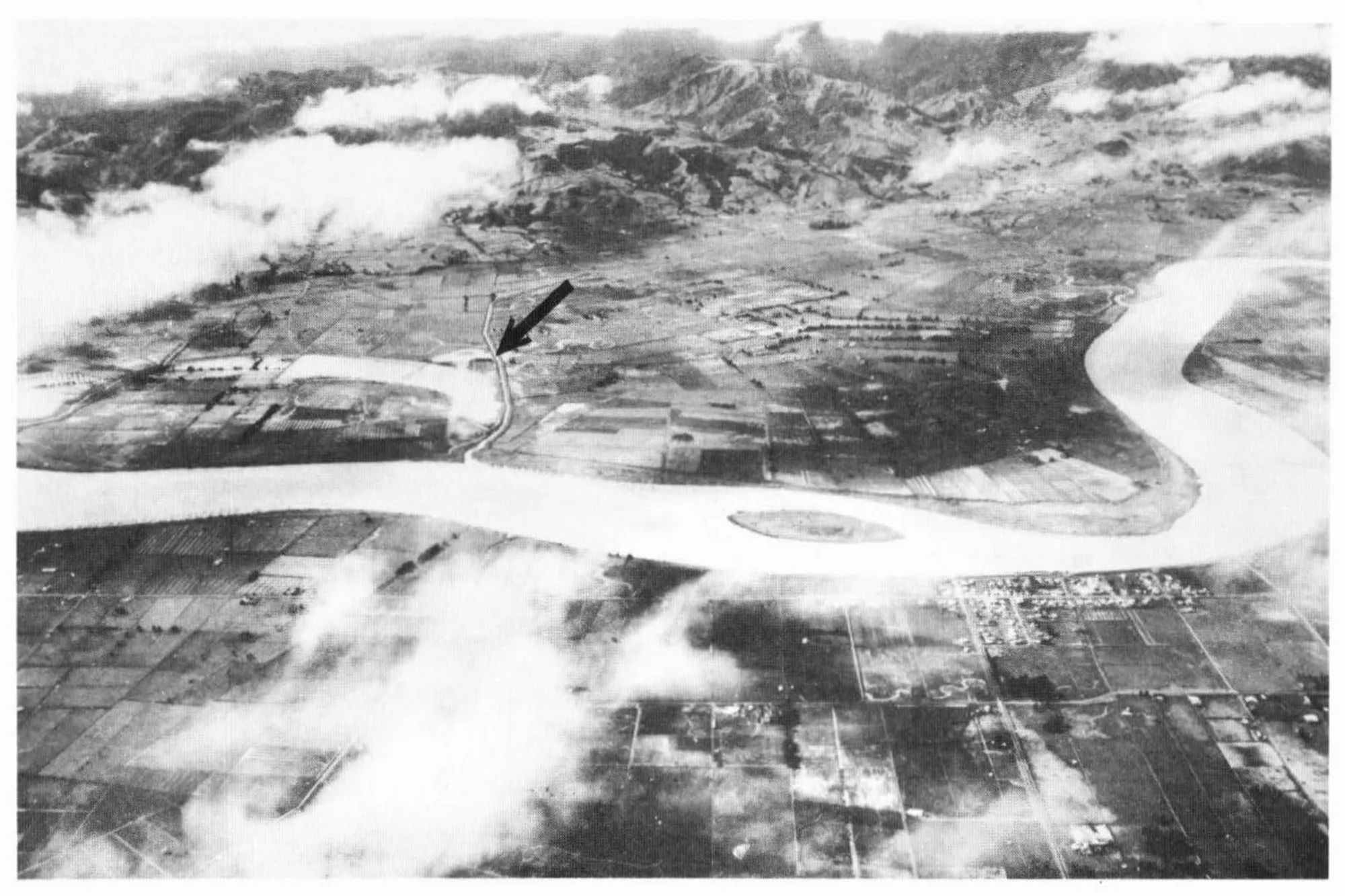
Location of Oruarangi Pā in 1976, noting recent flooding settling in historic flood/river plains - Simon Best 1979.
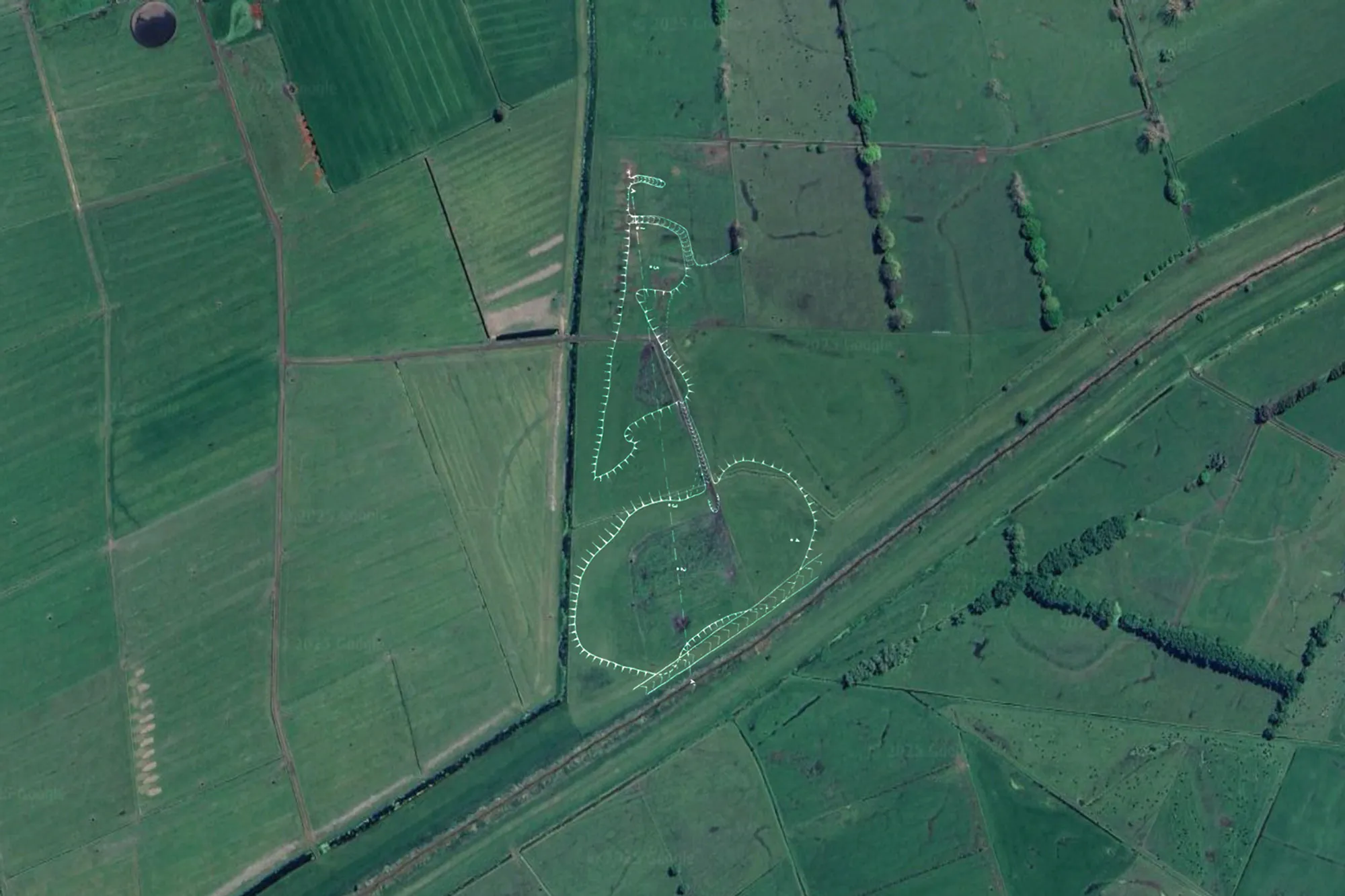
Current Google Map of Oruarangi Pā with the plan overlaid and old water courses still visible from above.
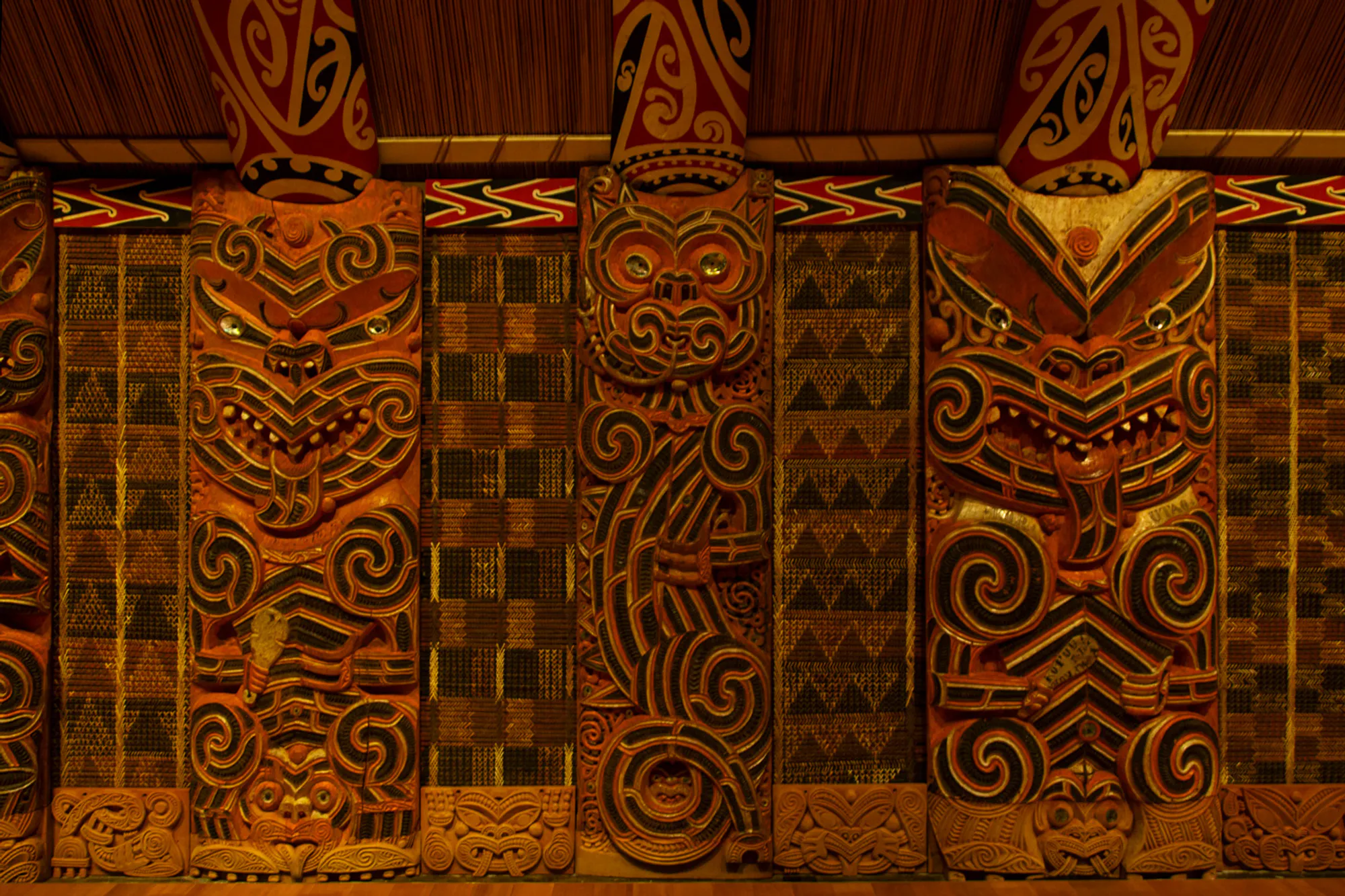
Ureia, the friendly taniwha depicted in Hotonui Whare, also located at the Auckland Museum.
Located near the head of the Matatoki and Waihou Rivers, Oruarangi was constructed from the swamp using layers of shell brought from the shores of Tīkapa Moana. Around three hectares in size and surrounded by tidal mud, it was naturally fortified. A neighbouring pā, Paterangi, was located immediately north of Oruarangi and was connected by built-up paths.
Visually, the pā is modest. It is an oval mound around two hectares wide, rising just one to two metres above the surrounding land. The Waihou River has since shifted west, leaving the pā landlocked on private farmland. A canal now runs nearby, but the site narrowly avoided destruction by the Waihou Valley Scheme, which bulldozed many other historic riverside pā. It lacks the features often associated with important pā sites, but its history runs deep.
Ngāti Hako are said to be the earliest inhabitants. The pā’s riverside location offered access downstream to kaimoana, upstream to inland trails, and into nearby valleys for berries and birds.
Around 1600, the Marutūāhu Federation, descendants of Hotunui and his son Marutūāhu who had returned from Kāwhia, settled peacefully alongside Ngāti Hako. That peace ended when members of Ngāti Hako and Ngāti Huarere murdered the wife of a Marutūāhu chief as she gathered harakeke nearby. A campaign of utu followed.
A taua (war party) eventually overcame the otherwise impenetrable Oruarangi Pā, but not without cost. A Marutūāhu chief was killed in the assault. This loss drove further retaliations, including the sacking of several Ngāti Huarere pā across the Thames region.
It was a defining moment in pre-European history, as the Marutūāhu Confederation, including Ngāti Maru, Ngāti Whanaunga, Ngāti Tamaterā and others, established permanent settlements across what is now Thames and Hauraki.
Local oral histories speak of the taniwha Ureia, a friendly, fish-like guardian said to dwell nearby. Ureia would stir the waters of Tīkapa Moana to warn of danger, as he did in 1820 before the sacking of Tōtara Pā.
Oruarangi Pā remained occupied for generations. On 20 November 1769, Captain James Cook, along with Joseph Banks, Tupaia, and Daniel Solander, rowed 12 miles up the Waihou River and visited the pā. Cook recorded:
“...we found a Māori village (Oruarangi Pā), which was built upon a small bank of dry sand, but entirely surrounded by deep mud, which possibly the inhabitants might consider as a defence. These people, as soon as they saw us, thronged to the banks and invited us on shore. We accepted the invitation and made them a visit, notwithstanding the mud.”
By the early 1830s, Oruarangi Pā had been abandoned. Local fossickers began digging through its layered shell deposits, often with little regard for archaeological context. Many of the artefacts they uncovered eventually found their way into the Auckland Museum, which later conducted formal excavations. These collections now form a major part of its Māori exhibition.
In his diary, local identity W. G. Hammond described visiting the site around 1888. Then, Oruarangi was “practically an island,” raised three feet above the surrounding swamp, and considered tapu. He noted sandstone sharpeners, obsidian flakes, a carved stone basin, and even a rotting canoe surrounded by flax, beneath which lay human bones.
Later, granted legal permission to excavate, provided burial areas remained untouched, Hammond and a small group dug on weekends. But their efforts were soon overshadowed by Selwyn Te Moananui Hovell, who arrived with a crew of five and worked the site full-time. According to Hammond, Hovell excavated "wholesale," unearthing thousands of taonga: shell war trumpets, fish hooks, tattooing tools, toggles, pumice bowls, stone adzes, bone weapons, pigeon spear barbs, and greenstone pendants. Even palisade posts were dug up and burned for firewood.
The finds reflect generations of daily life and craft. Tools of stone, bone, and shell were used for hunting, gathering, weaving, and ornamentation. Pendants, combs, chisels, bird spears, patu muka, and musical instruments speak to status, seasonal rhythms, and cultural expression. Post-contact items like glass and ceramics show how quickly new materials were adapted. Though most wood has decayed, a carved kūmara pit lintel survives, an example of rare Hauraki artistry. Changes in design over time suggest centuries of use, with early tools like serpentine reels and adzes dating pre-1500 AD, and later additions such as pāua inlays showing how taonga were personalised across generations.
Today, Oruarangi Pā sits quietly on farmland. Its surface is humble, but its story endures. Through archaeology, oral tradition, and museum collections, its legacy lives on as a powerful testament to the depth and complexity of Māori life in Hauraki.
Sources:
https://www.facebook.com/explorethamesnz
Objects from Oruarangi – Auckland Museum
Oruarangi – Simon Best, New Zealand Archaeological Association, 1979
Maori Heritage of Thames – John McEnteer and Taimona Turoa, 1993